Websites
Why Business Owners Lie to Themselves About Their Website
Author: Trevor Hunter
Published: September 27, 2025
Most business owners don't lie to other people about their website. They lie to themselves.
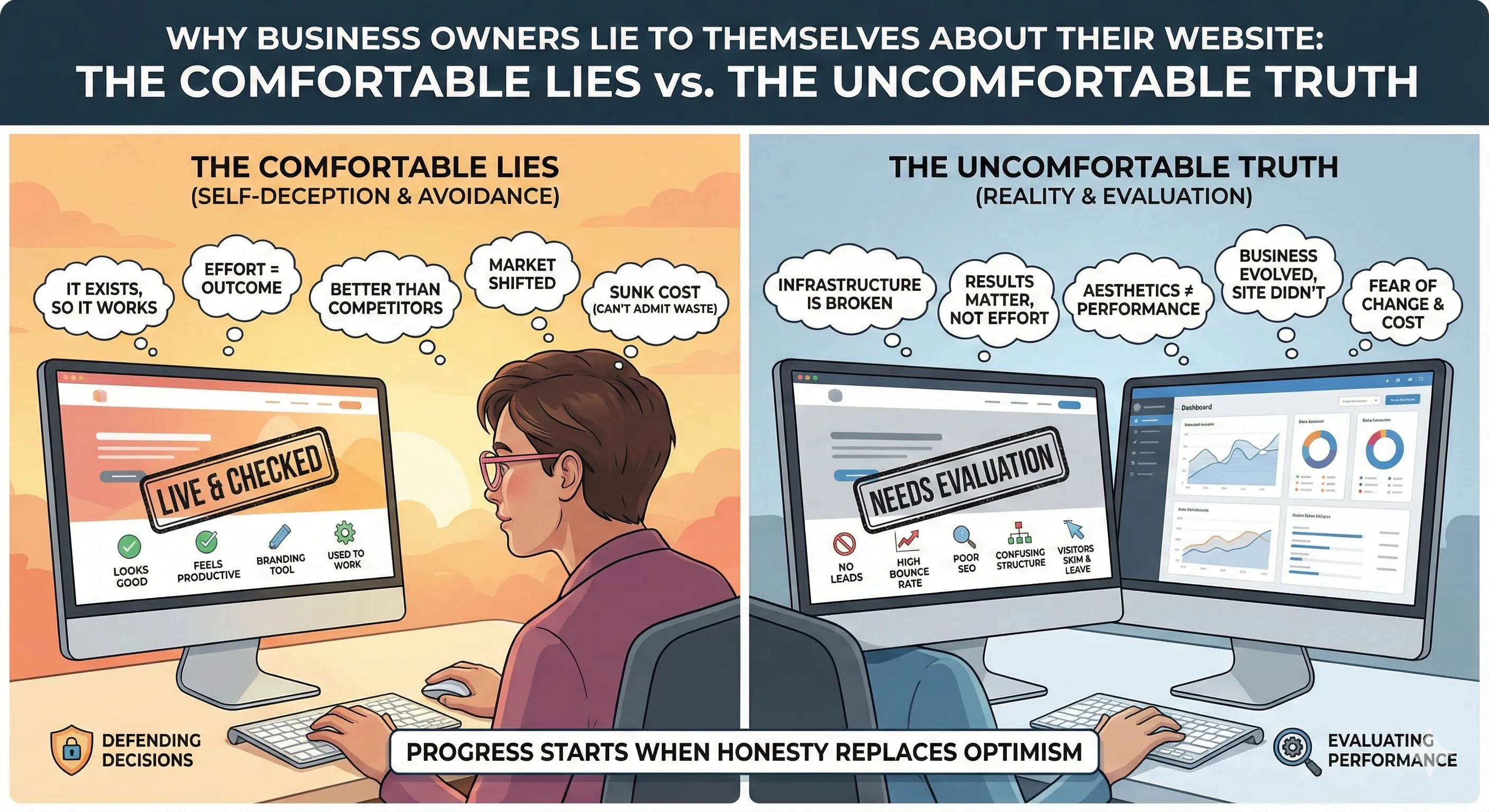
The lie is rarely intentional. It's usually protective. Admitting the website isn't working forces harder questions about decisions, priorities, and responsibility. It's easier to blame traffic, algorithms, competition, or the market than to confront the possibility that the foundation is wrong.
One of the most common self-deceptions is confusing existence with effectiveness. The website is live, therefore the box is checked. From that point on, every problem must be somewhere else. Marketing doesn't work. Ads don't convert. SEO is broken.
The website becomes untouchable.
Another lie is believing effort equals outcome. Business owners spend time tweaking copy, changing images, adjusting colors, and adding sections. They assume that because work is being done, progress is being made. In reality, most of those changes don't affect the things that matter.
Effort feels productive. Results are harder to measure.
There's also the lie of comparison. Owners look at competitor websites and judge based on appearance alone. If their site looks similar or better, they assume performance must be similar too. They don't see rankings, load times, structure, or conversion behavior. They see aesthetics and stop there.
Another common story is that the website "used to work." Leads slowed down, rankings dropped, but the explanation becomes external. The market shifted. Customers changed. Demand disappeared. Sometimes that's true. Often it isn't.
More often, the website drifted out of alignment while the business evolved. Services changed. Pricing changed. Capacity changed. The site stayed frozen in time.
There's also a reluctance to admit sunk cost. Money was spent. Decisions were made. Admitting the website isn't doing its job feels like admitting that money was wasted. That's uncomfortable. So the site gets defended instead of evaluated.
Business owners also lie to themselves about how customers behave. They imagine visitors reading carefully, exploring multiple pages, and appreciating nuance. In reality, most visitors skim, decide quickly, and leave if clarity isn't immediate.
Design gets blamed because it's visible. Infrastructure doesn't because it isn't.
Another lie is assuming the website is a branding tool first and a sales tool second. Branding matters, but only after relevance is established. A site that looks good but doesn't answer basic questions quickly isn't building a brand. It's creating confusion.
There's also fear underneath a lot of this. If the website is the problem, fixing it requires change. Change costs money. Change risks failure. It's safer emotionally to believe nothing can be done.