Websites
What a Website Should Do for a Business (And What It Can't)
Author: Trevor Hunter
Published: September 8, 2025
Websites are one of the most misunderstood tools in business.
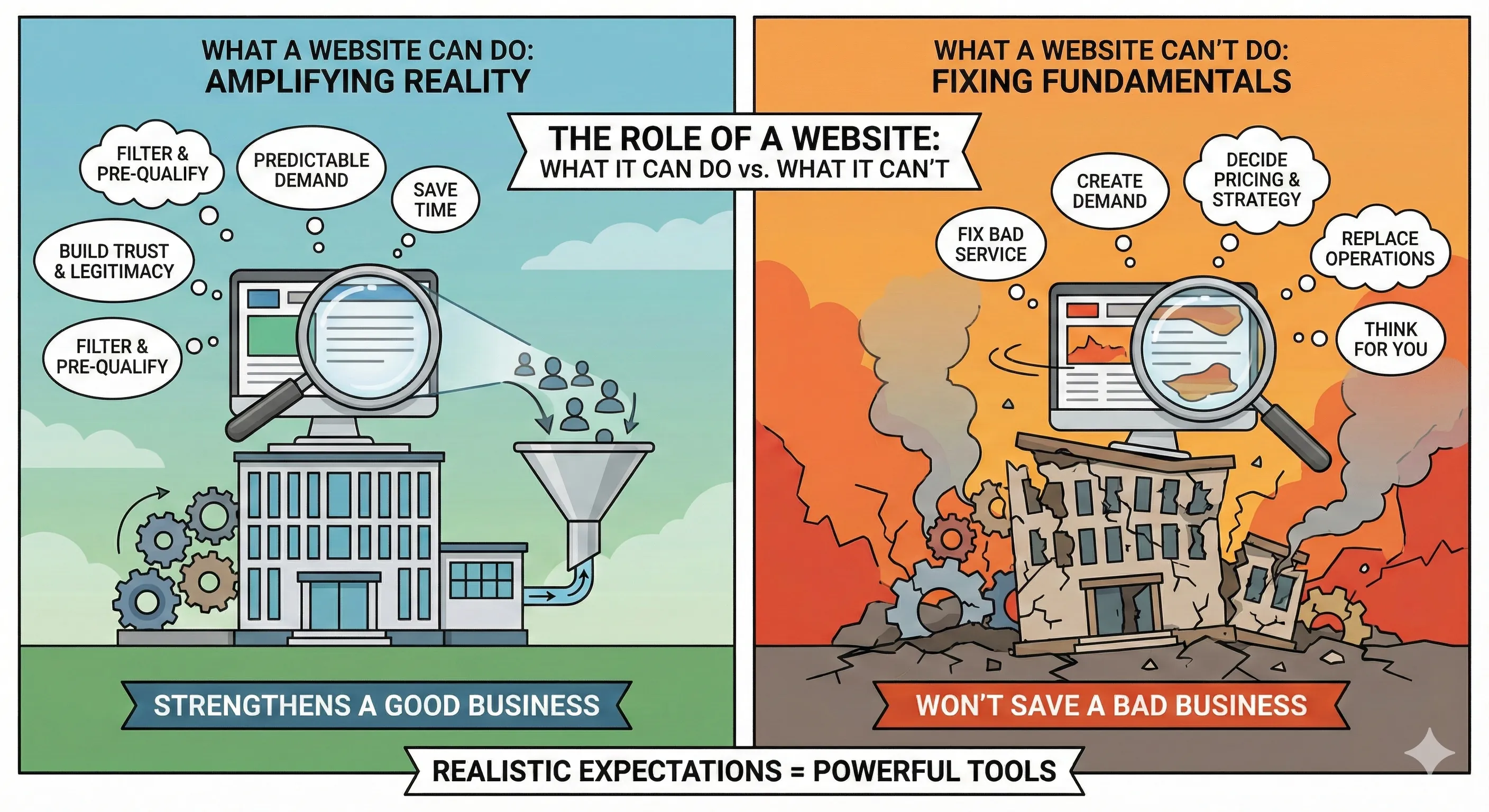
Owners either expect far too much from them or dismiss them entirely. Both positions come from the same problem: unclear expectations.
A website is not a magic machine. It does not fix bad service, poor operations, or broken pricing. It cannot compensate for a business that doesn't answer the phone, misses appointments, or delivers inconsistent work.
What a website can do is much more specific—and much more valuable when understood correctly.
At its best, a website acts as a filter. It attracts the right people and repels the wrong ones. It sets expectations before a conversation ever happens. That alone saves time, energy, and frustration on both sides.
A good website clearly communicates what the business does, who it's for, and how to take the next step. It answers basic questions so the owner doesn't have to repeat themselves dozens of times a week.
It also creates legitimacy. When someone searches for a service and finds a business that looks established, clear, and professional, trust starts forming before contact. That trust doesn't come from fancy design. It comes from coherence. Everything lines up.
A website can also support growth by making demand predictable. When it ranks well and converts consistently, inbound inquiries become more stable. That stability allows businesses to plan, hire, and invest with more confidence.
What a website cannot do is replace fundamentals. It can't create demand for something people don't want. It can't turn mediocre work into premium results. It can't fix a reputation that's already been burned.
This is where a lot of disappointment comes from. Business owners build or redesign a website hoping it will solve deeper problems. When those problems persist, the website gets blamed.
In reality, the website is doing exactly what it should: amplifying reality.