Business Fundamentals
The Difference Between Busy and Profitable
Author: Trevor Hunter
Published: September 14, 2025
Most business owners don't have a revenue problem.
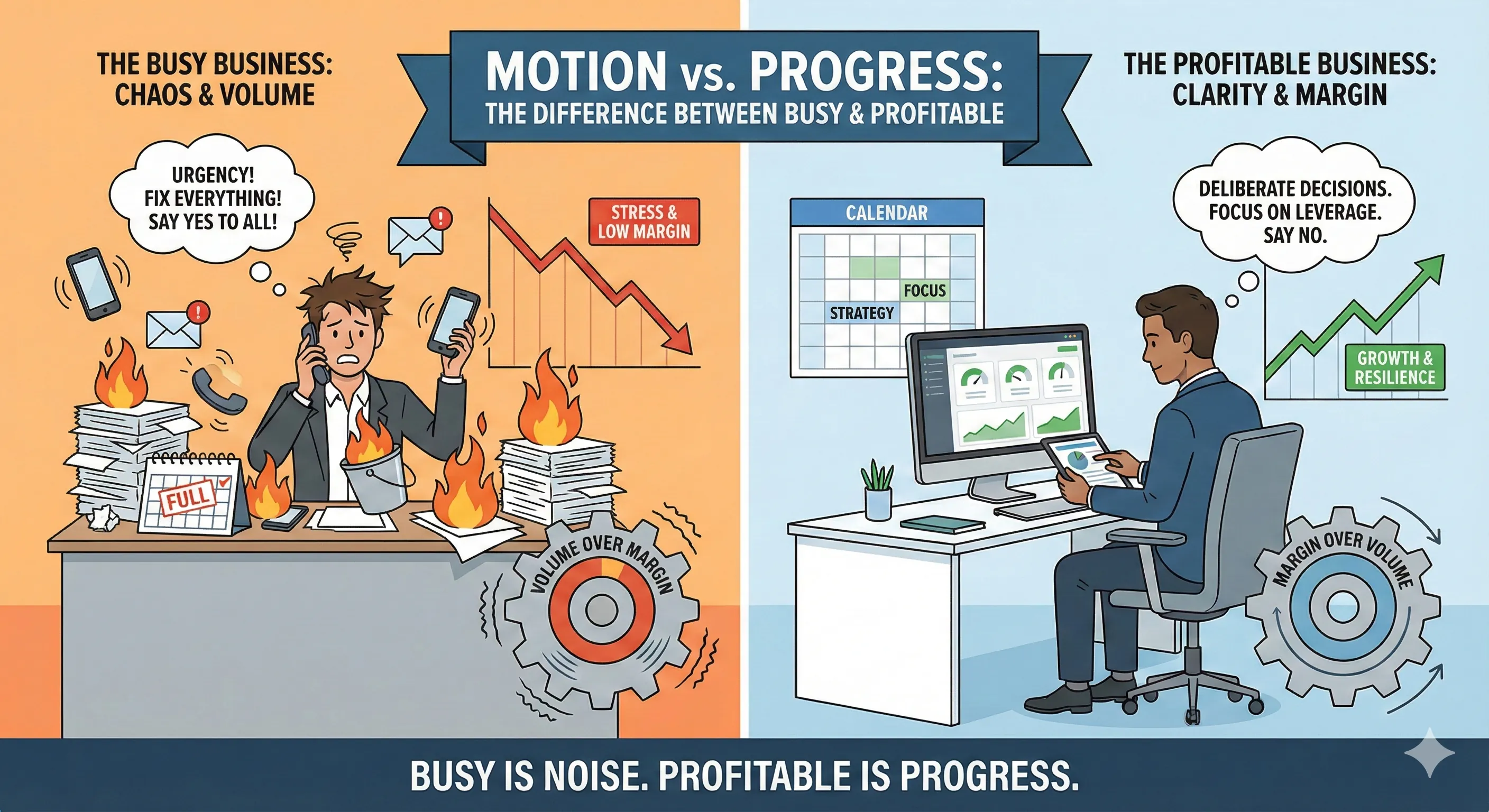
They have a clarity problem.
They're busy all day. Phones ringing. Emails flying. Teams moving. Jobs booked. Calendars full. From the outside, it looks like things are working.
But when you peel it back, the numbers don't match the effort.
Cash feels tight. Stress feels high. And somehow, after all that activity, there's not much left over.
That's the difference between busy and profitable.
Busy is motion.
Profitable is progress.
And confusing the two is one of the fastest ways to burn yourself out while convincing yourself you're doing fine.
Busy feels productive because it's loud. It fills your day. It gives you something to point at when you're exhausted. You answer messages. You jump on calls. You fix problems. You put out fires. At the end of the day, you collapse and tell yourself you earned it.
But profitability is quieter.
Profitability shows up in clean numbers, predictable outcomes, and boring consistency. It doesn't require constant urgency. It doesn't need you involved in everything. And it doesn't care how many hours you worked.
This is where a lot of owners get stuck.
They mistake effort for effectiveness.
They mistake speed for direction.
They mistake being needed for being valuable.
A busy business can still be fragile.
A profitable business is resilient.
The easiest way to spot the difference is to look at what actually moves the business forward versus what just keeps it running.
Busy work keeps the lights on. Profitable work builds leverage.
Busy work is responding to everything immediately. Profitable work is deciding what deserves a response at all.
Busy work is saying yes to every customer. Profitable work is knowing which customers you should never say yes to.
Busy businesses optimize for volume. Profitable businesses optimize for margin.
That's an uncomfortable shift for a lot of people.
Volume feels safe. More jobs, more leads, more clients — it looks like growth. But volume without margin just multiplies your problems. You get more stress, more overhead, more mistakes, and more people depending on a system that isn't actually working.
Margin gives you room to breathe.
Margin gives you options.
Margin lets you say no.
And saying no is one of the most important skills an owner can develop.
Most businesses aren't under-earning because demand isn't there. They're under-earning because they've trained themselves to chase everything instead of protecting what matters.