Business Fundamentals
Pricing Is a Confidence Problem, Not a Math Problem
Author: Trevor Hunter
Published: June 11, 2025
Most pricing problems aren't caused by bad math.
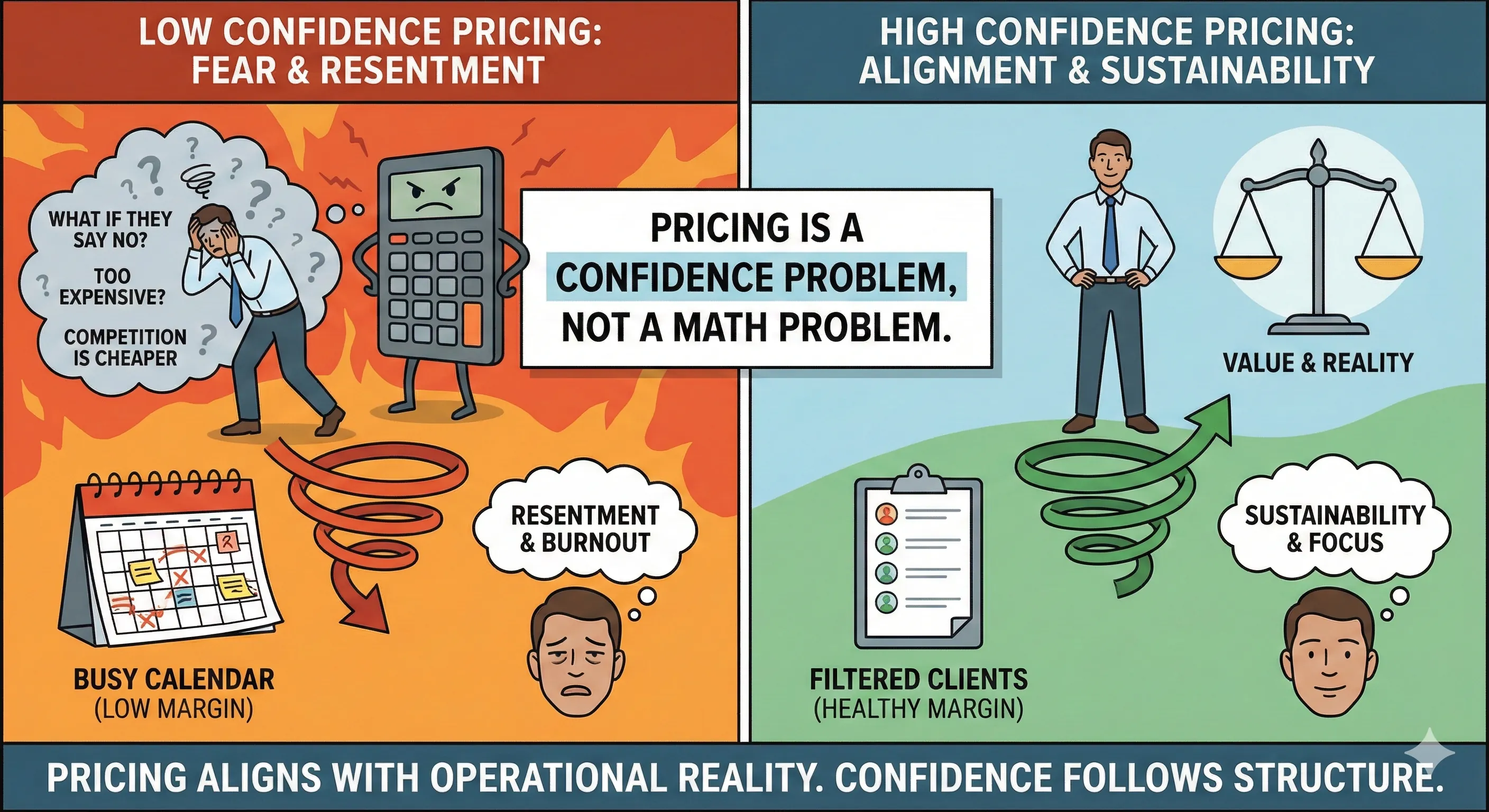
They're caused by hesitation.
Business owners love to tell themselves their prices are low because of competition, the market, customer expectations, or the economy. Those things exist, sure. But they're rarely the real reason.
The real reason is discomfort.
Pricing forces you to decide what your work is worth and then say it out loud. That's not a spreadsheet problem. That's a confidence problem.
If pricing were just math, most businesses would have fixed it already. The formulas are simple. Costs plus margin. Time plus overhead. Risk plus return.
But pricing doesn't happen in a vacuum. It happens in conversations. On proposals. On invoices. Face to face with customers who might say no.
That's where things break down.
Owners start negotiating against themselves before anyone asks. They lower the number "just to be safe." They justify discounts before they're requested. They anchor their value to competitors instead of outcomes.
None of that is math.
That's fear.
Fear of losing the deal. Fear of being judged. Fear of being told they're too expensive.
So instead of pricing for sustainability, they price for acceptance.
That works in the short term. You win jobs. You stay busy. The calendar fills up.
But over time, it creates resentment.
Margins shrink. Expectations rise. Every job feels heavier than it should. And the owner starts quietly dreading the work they once wanted.
Underpricing doesn't just hurt the business. It changes how customers treat you.
Low prices attract comparison shoppers. They invite negotiation. They signal flexibility where there shouldn't be any.
High-confidence pricing does the opposite.
It sets boundaries.
It filters.
It positions.
Confident prices tell customers what kind of business they're dealing with.
This is where people misunderstand pricing strategy. They think raising prices is about being greedy or aggressive. It's not.
It's about alignment.
Your price should align with the way you actually operate. The time you spend. The attention you give. The responsibility you carry.
If your price doesn't support that reality, something has to give. And it's usually you.