Business Fundamentals
Why "More Leads" Is the Wrong First Goal
Author: Trevor Hunter
Published: June 24, 2025
When businesses feel stuck, the default answer is almost always the same.
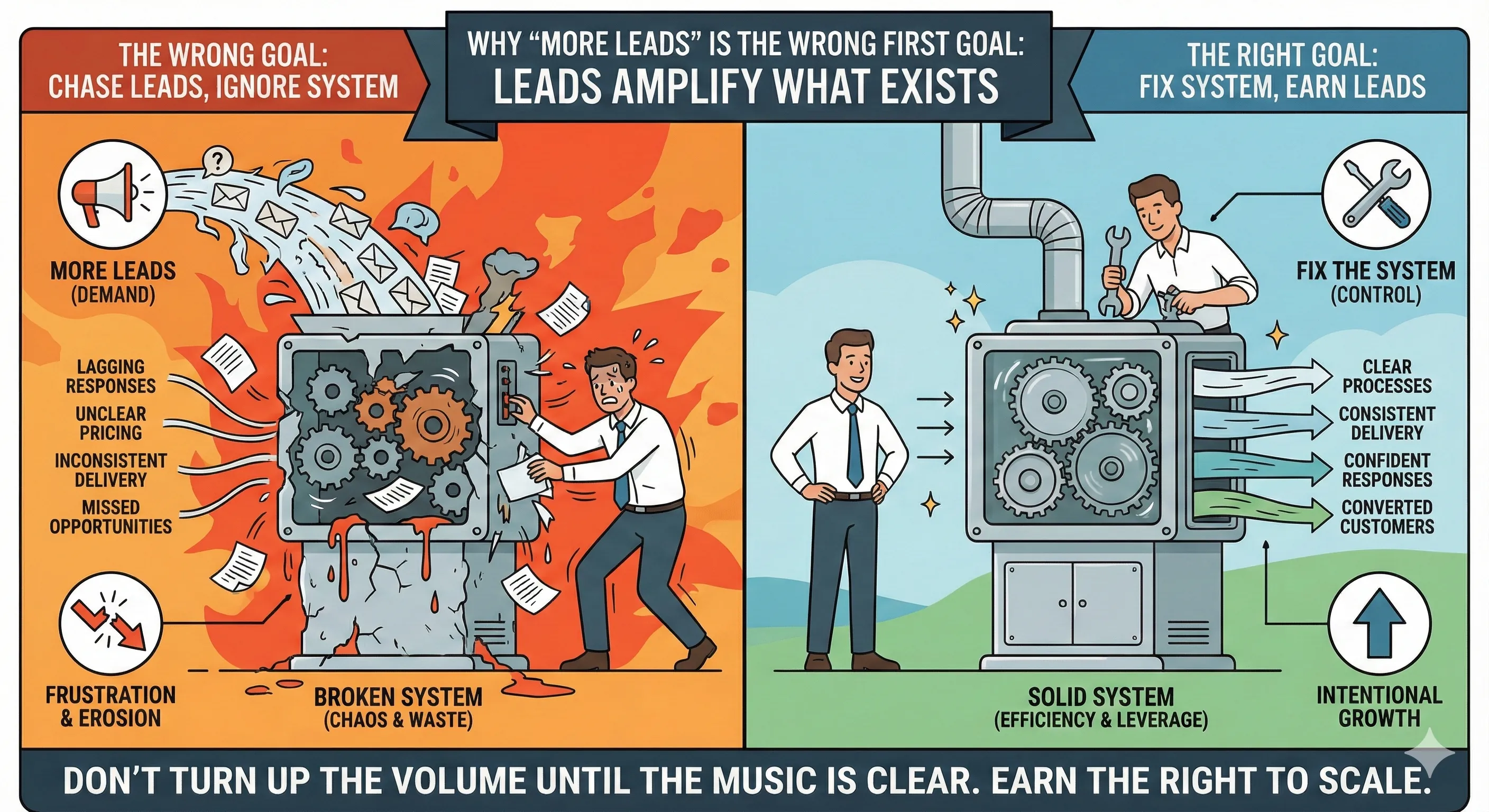
"We need more leads."
It sounds logical. More interest should mean more sales. More sales should mean more growth. On the surface, it feels like the obvious lever to pull.
Most of the time, it's the wrong one.
Not because leads don't matter, but because they magnify whatever already exists.
If your operations are messy, more leads create more mess.
If your pricing is unclear, more leads create more negotiation.
If your delivery is inconsistent, more leads create more disappointed customers.
Leads don't fix problems.
They expose them.
This is where many businesses get trapped. They experience a slowdown or plateau and assume demand is the issue. So they spend money and energy driving more traffic, running more ads, chasing more attention.
For a brief moment, things feel better.
The phone rings more. Inquiries come in. Activity spikes.
Then the same issues resurface, just louder.
Response times lag. Follow-ups slip. Close rates stay flat. Customers hesitate. Teams get overwhelmed.
Owners start asking why the leads "aren't good."
In reality, the leads are fine.
The system isn't.
A business should earn the right to scale demand. That right comes from having a process that can reliably handle what's already coming in.
Most businesses never pause to ask a simple question:
"What happens after someone reaches out?"
Not in theory. In practice.
Who responds?
How fast?
What do they say?
What happens next?
If those answers aren't clear, adding more leads just creates friction.
Another issue is that lead volume can mask deeper problems. A flood of inquiries can hide poor conversion rates. It can make weak offers look acceptable. It can distract owners from fixing fundamentals because the top of the funnel feels healthy.
But volume is a terrible substitute for efficiency.
Ten good leads handled well beat fifty leads handled poorly.