Business Fundamentals
Hiring Isn't Hard — Managing Expectations Is
Author: Trevor Hunter
Published: August 4, 2025
Most business owners don't struggle with hiring because there are no good people.
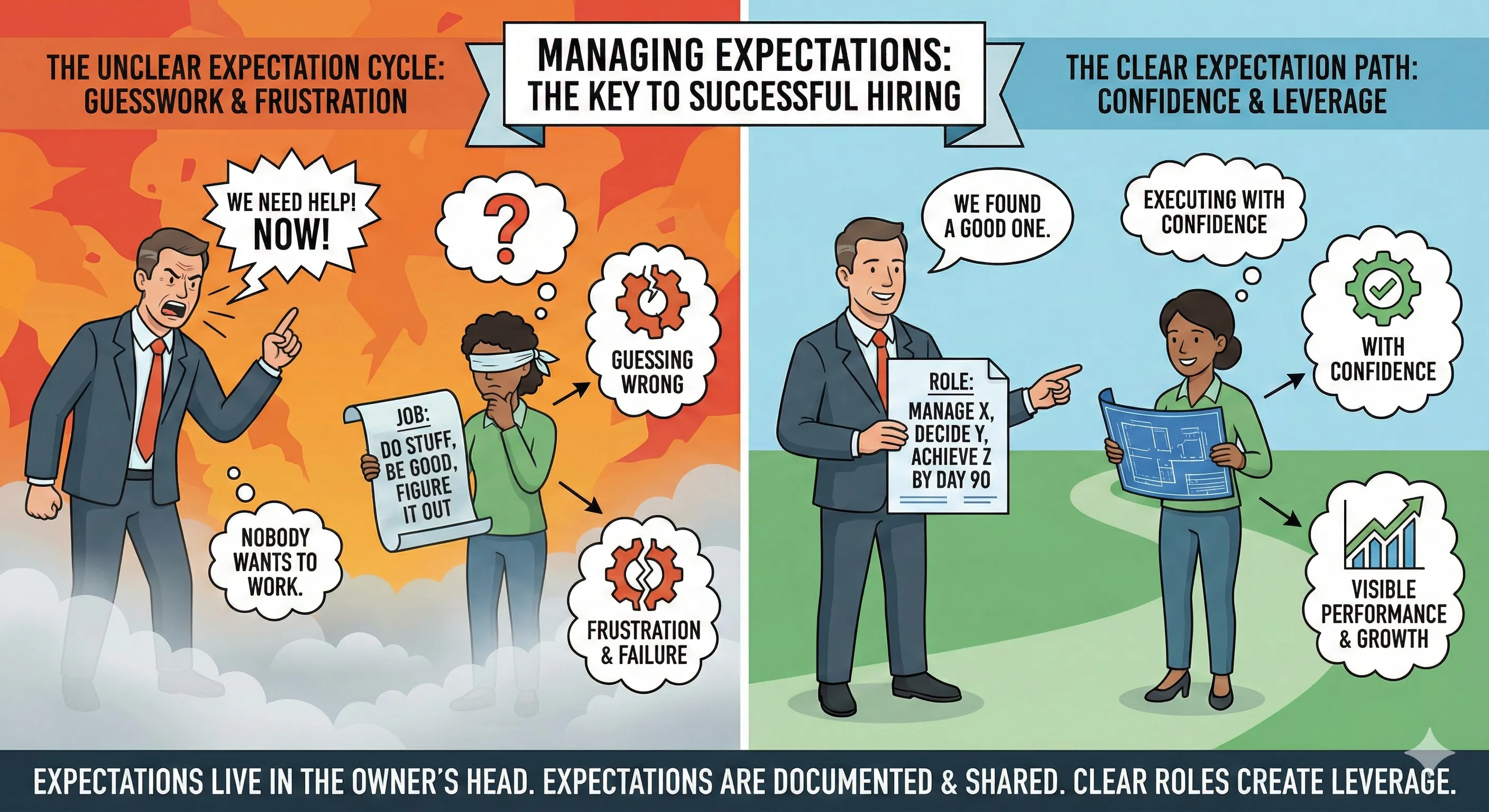
They struggle because they don't know what they're actually hiring for.
That distinction matters.
When someone says "we can't find good help," what they usually mean is that the people they hire don't meet expectations. They don't move fast enough. They don't take initiative. They don't care like the owner does.
So the assumption becomes that good people are rare.
In reality, unclear expectations are common.
Hiring feels hard because most businesses treat it like a rescue mission instead of a design problem. Someone is overwhelmed. Work is piling up. Deadlines are slipping. The instinct is to hire quickly and hope relief shows up.
That's not a plan. That's a gamble.
When expectations aren't defined before someone walks in the door, the new hire is forced to guess. They guess what "good" looks like. They guess how much initiative is expected. They guess where decisions stop and escalation starts.
Some people guess right.
Most don't.
That's when frustration kicks in.
Owners feel let down. Employees feel confused. Everyone quietly assumes the other side should know better.
This is where hiring myths take root.
People say things like "nobody wants to work anymore" or "you can't find reliable people." Those statements feel true when expectations live only in the owner's head.
The truth is simpler and more uncomfortable.
Most employees fail because they were never set up to succeed.
Think about how roles are usually defined. A job title. A loose description. A vague list of responsibilities. Then the rest is handled through osmosis.
Watch how I do it.
Figure it out.
Ask if you need help.
That works only when the owner is constantly present.
As soon as the business grows, that approach collapses.
Good people want clarity. They want to know what winning looks like. They want to understand how success is measured and where boundaries are.
When that's missing, even strong performers hesitate. They play it safe. They wait for direction. They avoid making mistakes because the cost of guessing wrong feels high.
Owners interpret that hesitation as laziness.
It's usually caution.