
I'm a proper Lamborghini Miura fan. Not casually.
I mean I have a database. I know where just about every Miura is, who owns it, where it's been, when it was restored, what spec it is. I'm just waiting for the day I can pony up $3 million for the right one.
So with all that said, it's not often that I see a Miura I don't recognize.
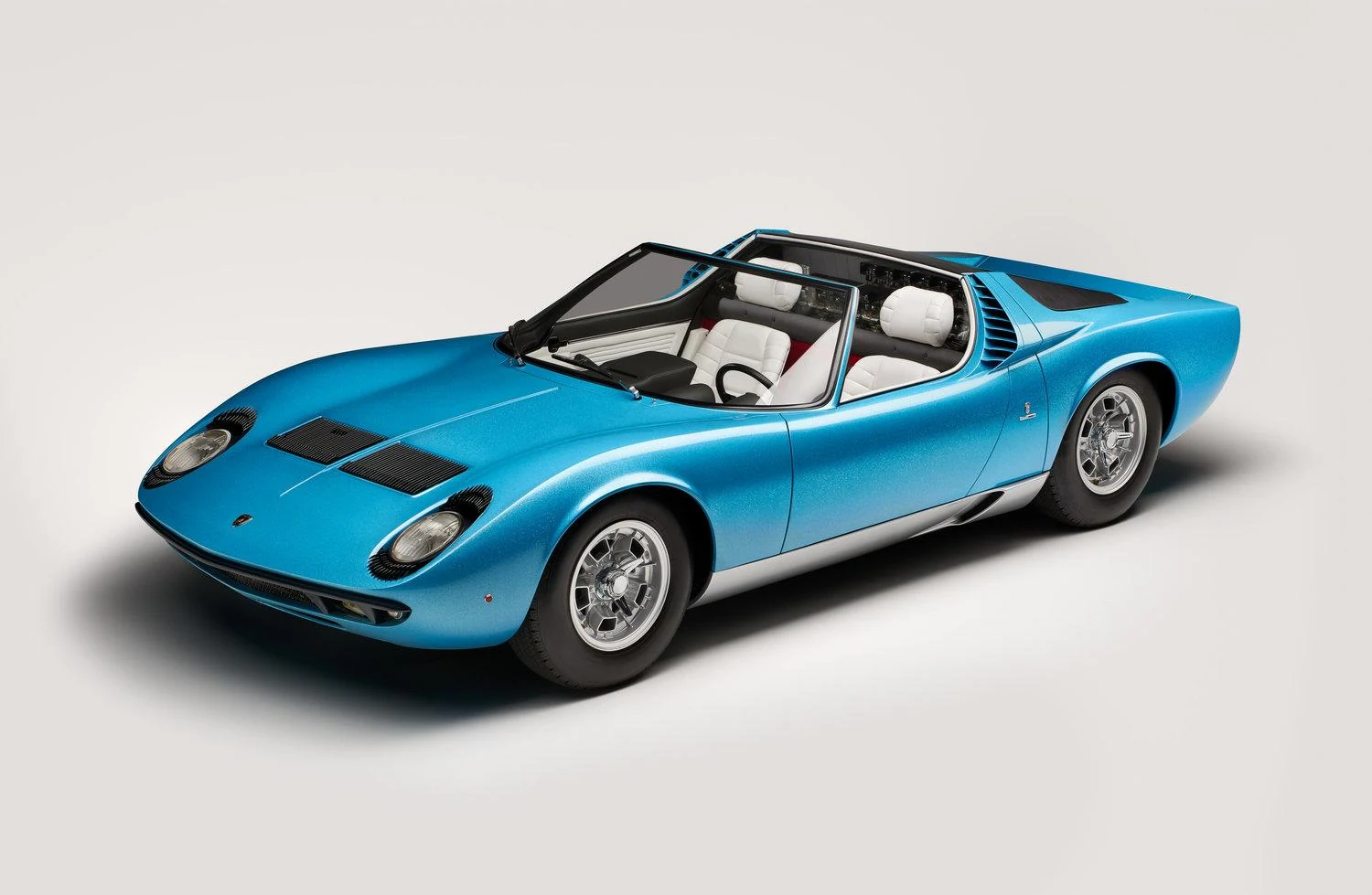
I'm scrolling LinkedIn and this one pops up. Full stop. I saw the exterior color and that white interior and I was like... whoa, what is this?
Immediately I thought it was fake. I figured it was an AI image or somebody had color-toned an old photo. But I went and did some digging.
At first I didn't even notice that the roof wasn't there. I didn't even notice that it was a roadster. I just glazed over it because I guess Miuras have roofs and I just didn't notice.
Then it clicks.
And now I'm digging.
And somehow… this one never crossed my radar.
Which is insane.
Because this isn't just some obscure variant or one-off coachbuilt oddity. This is the 1968 Miura Roadster. A factory-level Bertone concept. A car that, once you actually understand what it is, kind of breaks your brain a little.
First off, the spec alone is ridiculous. Bright metallic azure blue. Magnolia white interior. No roof. No side windows. Just you, the car, and a 3.9L V12 sitting basically right behind your skull. Twelve carburetors. Inches from your head. I can't even imagine what that sounds like at 7,000 RPM.
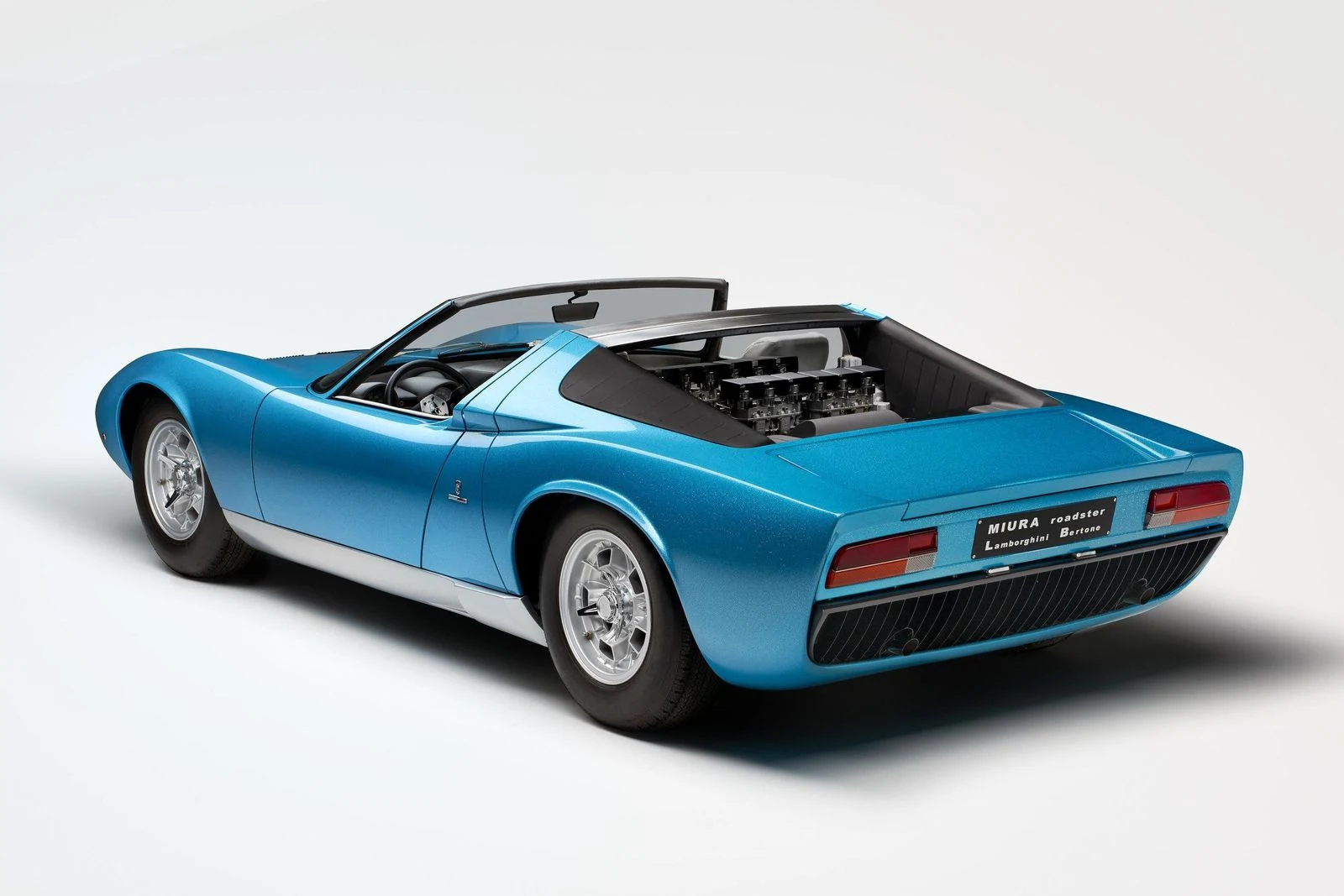
People throw around "raw driving experience" like it means something. This is actually what that looks like. No insulation. No separation. No barrier. You're not driving it, you're inside of it.
And what's wild is this wasn't some hack job. Bertone actually reworked the car. Changed the rake of the windshield, reinforced the chassis, modified the rear, enlarged the air intakes. The roof isn't removable, it just doesn't exist. No side glass either. This thing was designed to be like this.
Which almost makes it weirder that it never became a real production model. Because people wanted it. And Lamborghini said no. Every time.
Probably because structurally it makes no sense. You take the roof off a Miura and the whole thing wants to flex. Even with reinforcement, you're fighting physics. And at that level, they weren't about to compromise the car just to make a handful of open-top versions. So it stayed a one-off.
Then it gets even stranger. The car gets sold, stripped down, rebuilt into the Zn75. Different color, different purpose, basically turned into a rolling metallurgy experiment. And for years, that's what it was.
Which probably explains why it slipped past me. Because if you're tracking Miuras, you're looking at P400, S, SV, maybe SVJ if you're deep into it. You're not chasing a one-off concept that got turned into a zinc research demo and disappeared into collections. It sits outside the normal lineage.
Then it gets restored back to what it originally was. That insane blue. That white interior. That completely open design.
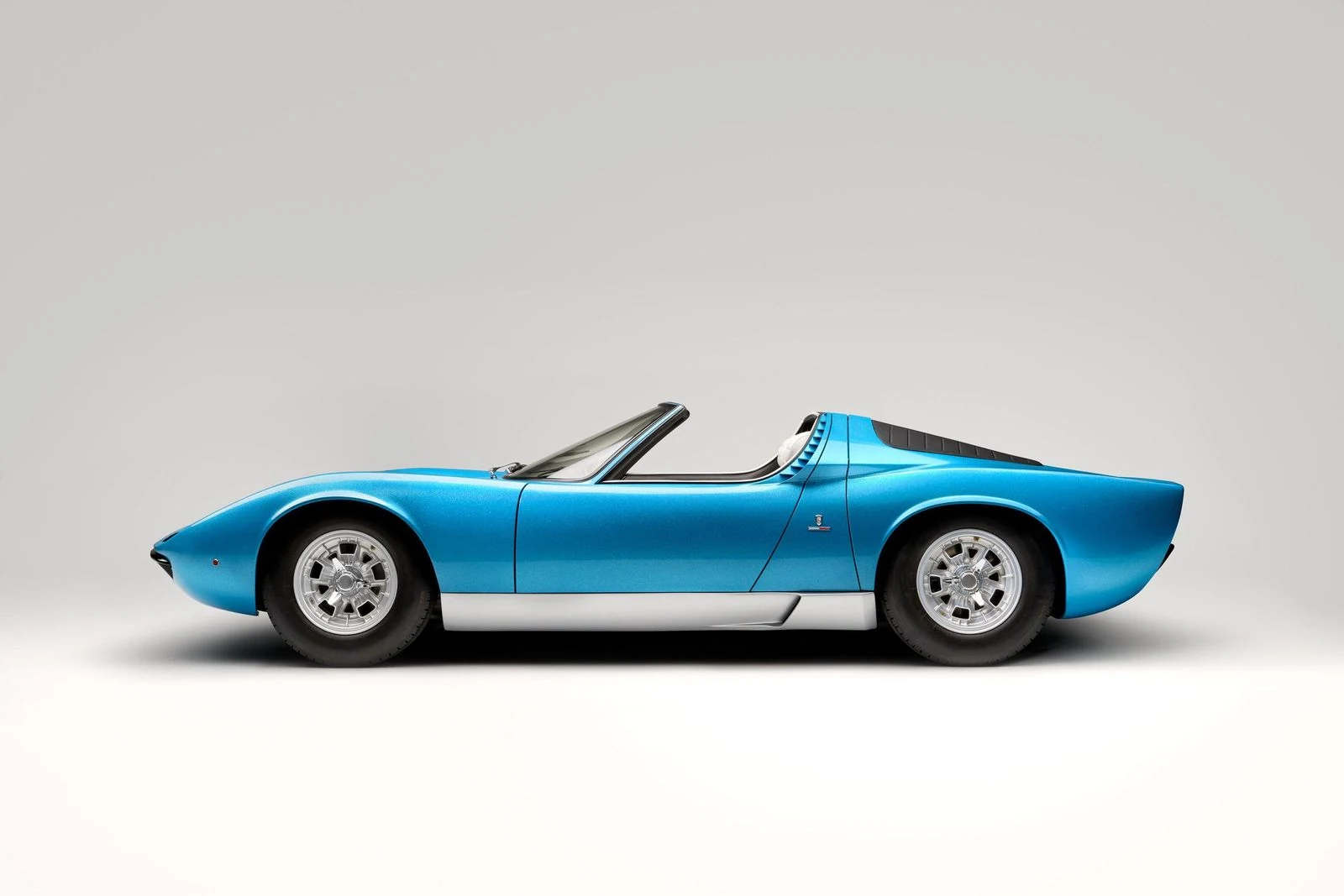
And now you're left with what might be one of the most interesting Lamborghinis ever built. Not because of production numbers or specs on paper, but because of what it represents. No restraint. No compromise. Just build it and see what happens.
And honestly… I love that I can still stumble across something like this. Especially in a space I thought I knew cold. That's the best part of being into this stuff. You think you've seen it all, and then something like this shows up out of nowhere and reminds you that you haven't.
1968 Lamborghini Miura Roadster Specifications
| Production Years | Prototype only (1968) |
|---|---|
| Engine | 3.9 L V12 |
| Power | 350 hp @ 7,500 rpm |
| Torque | 262 lb-ft @ 5,500 rpm |
| Top Speed | 162 mph (261 km/h) |
| 0-60 mph | 6.7 seconds |
| Transmission | 5-speed manual |
| Brakes | Four-wheel disc brakes |
| Curb Weight | 2,425 lbs (1,100 kg) |
| Length | 171.3 inches (4,350 mm) |
| Width | 69.3 inches (1,760 mm) |
| Height | 42.5 inches (1,080 mm) |
| Wheelbase | 98.4 inches (2,500 mm) |
| Fuel Capacity | 82 L (21.6 gal) |
| Tires | Front: 205/70VR14, Rear: 215/70VR14 |
| Suspension | Independent suspension, coil springs, telescopic shock absorbers |
| Steering | Rack-and-pinion |